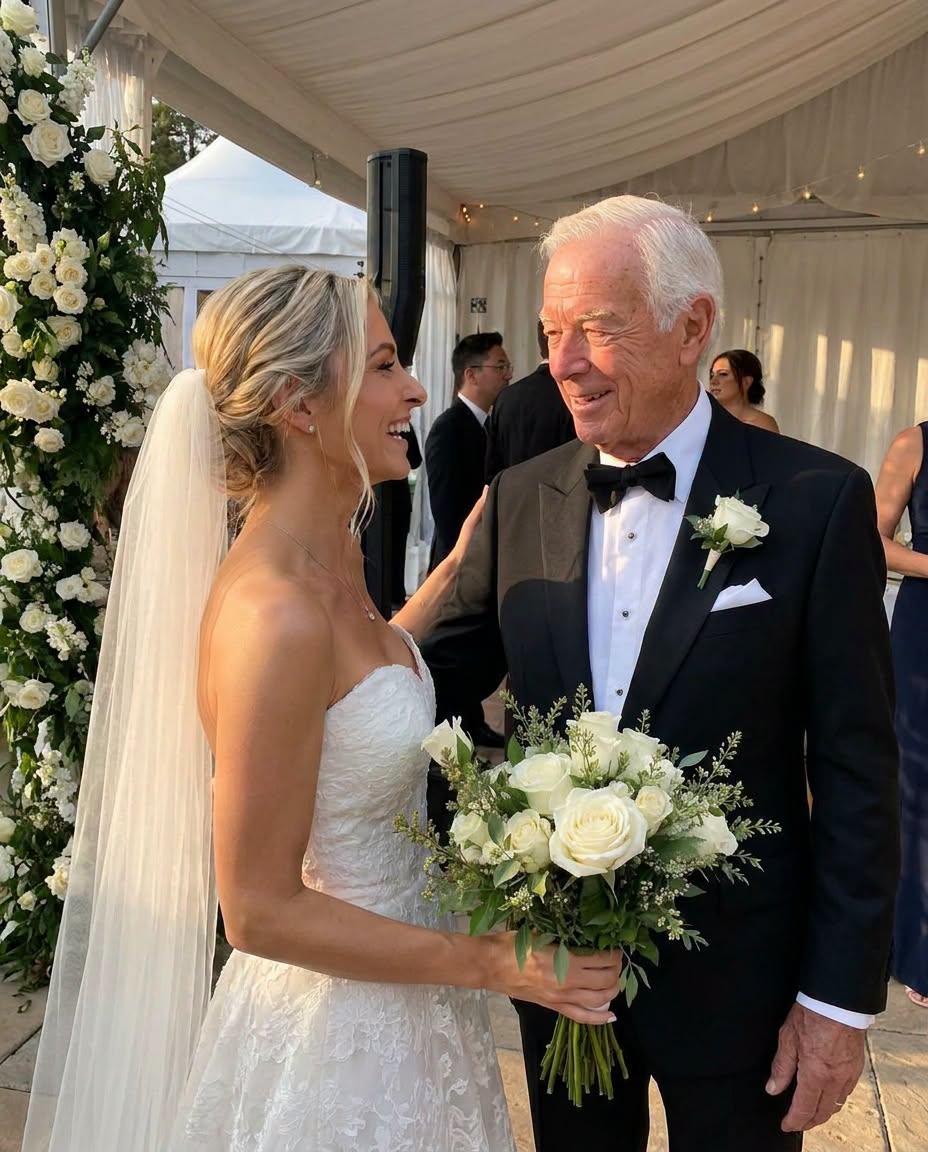
orman hid his discomfort behind forced jokes. They believed I was waiting for Arthur’s fortune and that patience, not affection, kept me by his side. The truth was harder to explain. Yes, Arthur’s wealth offered security, and after years of unstable relationships and temporary homes, security mattered to me. But I had not married him for mansions or accounts. I married him because he was the first person who never treated me like someone temporary.
Arthur understood parts of me I rarely spoke about. One quiet evening, he found me in the kitchen drinking chamomile tea and gently asked why I looked unsettled. That night I told him things I had hidden for years — how my mother’s death left me drifting between relatives, how past relationships made me feel disposable, and how easily I learned to pack emotionally before anyone could ask me to leave. I admitted something I had never said aloud without embarrassment: more than luxury or romance, I wanted a place where nobody could tell me I no longer belonged. Arthur listened without interrupting. He did not offer dramatic promises or speeches. He simply sat across from me and said softly, “That is a very lonely thing to carry.” Months later, he took me to a quiet lakeside cottage with faded blue shutters and a weathered porch overlooking the water. It had belonged to his late wife Sophia, and standing there, I felt an unfamiliar calm settle inside me.
As Arthur’s health declined, the atmosphere around us changed. His children visited more often, not out of closeness but concern over estate matters and future arrangements. Hospital hallways became tense places filled with whispered conversations and territorial glances. Deborah once blocked his room and told me only family belonged inside, forgetting that I was his wife. Arthur never tolerated it. Even as his body weakened, he defended me with quiet certainty. He reminded them that love and loyalty were not competitions against the past. When he finally passed away two days after giving me the box, grief mixed with exhaustion and uncertainty. At the funeral, Deborah openly implied my role had ended with his death, convinced the will would expose me as the fortune hunter she imagined me to be. I stayed silent, not because I agreed, but because Arthur had taught me that dignity does not need an audience.
The truth emerged later inside his lawyer’s office. Arthur had left his children the primary estate — the mansion, investments, business holdings, and valuables they expected to receive. For a moment, Deborah looked almost triumphant. Then the lawyer unfolded another document and explained that the lakeside cottage had never belonged to Arthur’s estate at all. It had been Sophia’s separate property, and she had left written instructions decades earlier. Her letter stunned the room. She wrote that if Arthur ever found another woman who brought peace back into his life, the cottage should become hers — not as charity or reward, but as shelter. The deed had already been transferred to me. Later that evening, I finally opened Arthur’s box. Inside was the cottage key, a photograph of me standing peacefully on its porch, and a letter explaining everything. “My children understand money,” he wrote. “But you understood loneliness. You once told me you wanted one door in this world that opened because you belonged there. Welcome home, darling.” Months later, sitting on that porch with tea in my hands and the lake turning silver at sunset, I realized Arthur had been right. He hadn’t left me wealth. He had left me something I had searched for my entire life — a place where I never had to ask permission to stay.